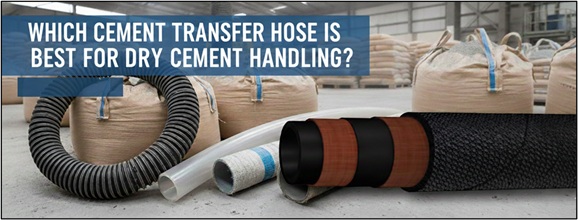
Efficient cement handling is essential in construction, bulk material transport, ready-
mix operations and silo loading systems. Among the most crucial elements in this
process is the cement transfer hose, which is a safe tool that transfers dry
concrete, fly ash, sand, grains and other abrasive bulk material. Quality hose
minimises downtime, leakages and enhances safety and ensuring the system is
running smoothly.
However, not all hoses are suitable for rugged, dry-cement applications. Dry cement
is very abrasive, and the resulting fine dust particles can easily ruin a low-grade
hose. It is against this reason that it is critical to select a hose that is able to resist
heavy friction and remain flexible, be able to endure pressure bursts and last in the
harsh working environment.
This blog explains what a cement transfer hose is, how it works, the types of hoses
available, key selection factors, and which type performs best for dry cement
handling. The goal is to help industries choose the right product for long-term
reliability and safety.
These hoses are designed in such a way that the inner tube is abrasion-resistant
with high reinforcement and a tough outer covering. The design is such that it has a
streamlined flow of materials, low wear and resistance to extreme environmental
factors.
Conventional rubber hoses are unable to resist very abrasive substances like
cement. This is where manufacturers are creating dry cement hoses that have a
stronger compound, anti-static and reinforced.
Improper use of any hose causes blockages, leakage, safety hazards and increased
maintenance expenses of the system.
That is why industries require a specialised dry cement transfer hose, which should
be constructed to address all these challenges.
Dry cement is transported by a cement hose using pressurised air. Here’s how the
process works:
The performance of the hose is influenced by the quality of the hose construction
and material.
An excellent cement transfer hose must offer:
These characteristics will prevent frequent replacement of the hose and downtimes.
Abrasion-resistant rubber cement transfer hose, which is reinforced with layers of
high-strength textile or steel wires, is the best hose to use in handling dry cement.
Rubber cement hoses are the most preferred because of their durability and
reliability in cases where industries need the products to be durable and reliable.
Amar Rubber Works is a manufacturer and supplier of industrial hoses of high
quality, which are reputed to be durable and efficient. Their cement transfer hoses
have:
The selection of cement transfer hose is a critical issue in operational effectiveness,
safety and durability. In the case of dry cement, the most suitable solution is an
excellent abrasion-resistant rubber cement transfer hose that is highly reinforced and
anti-statically guarded. These hoses are also very reliable and durable in harsh
conditions.
Industries have the assurance of cement hoses that are heavy-duty and of top
quality, with manufacturers such as Amar Rubber Works. Investing in the correct
hose guarantees the transfer of cement flows and minimisation of downtime and
poor productivity in all its operations.